Promises Kept
During cancer treatment, I made promises to myself about the life I hoped I’d get to live. Some were easier to keep than others. Years later, I’m still discovering what those promises mean in a life that turned out differently than I imagined.
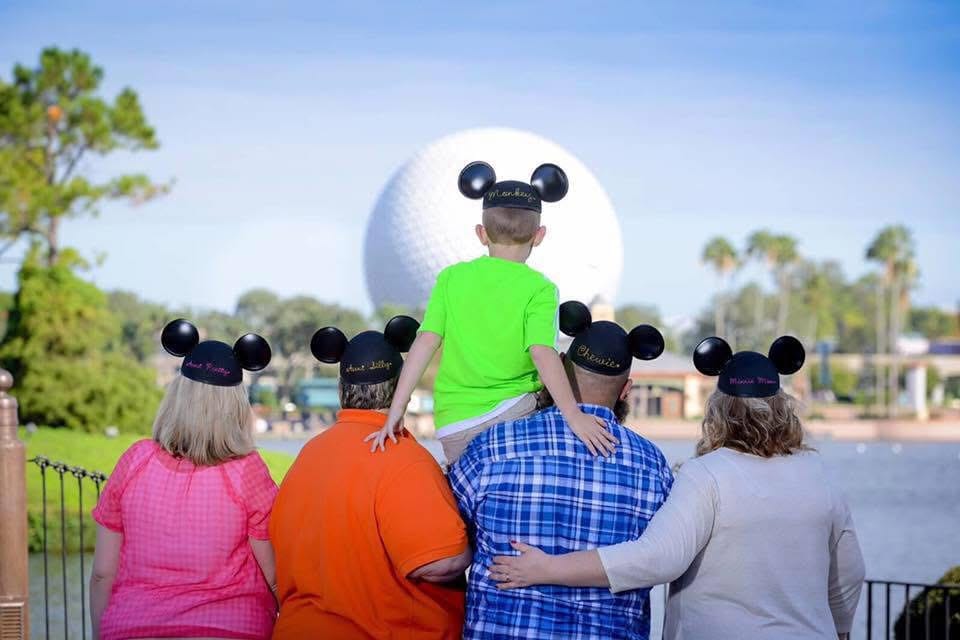
I spent a surprising amount of time thinking about Disney World during cancer treatment.
Not the practical things, like which park we’d visit first or where we’d eat. I thought about the music, the familiar places, and what it would feel like to be there again with my people. I could picture us walking through the parks, laughing at something ridiculous, and enjoying a day when nobody needed to discuss blood counts, medications, or the next medical appointment. There was something wonderful about imagining a place where the biggest decision might be which ride to go on next.
I didn’t have dates picked out or reservations to make. There were considerably more immediate things occupying my calendar. But somewhere in the middle of everything I was going through, I’d decided that if I made it through treatment, surgeries, and whatever else cancer had planned for me, we were going back.
I couldn’t promise anyone when that trip would happen, or even that it would happen at all. But I could make that promise to myself. Another trip to Disney World with my people, another chance to be together in a place we’d loved long before cancer became part of our lives.
Some days, it was simply something pleasant to think about. Other days, when treatment felt endless and the uncertainty became particularly difficult to carry, I needed something I could imagine beyond the next appointment. I knew what Disney World felt like, and I wanted very badly to be there again.
Cancer has an interesting way of rearranging your relationship with time, and I use the word interesting rather generously here. Suddenly, your calendar is filled with appointments, procedures, medications, and a remarkable amount of waiting. Waiting for test results, waiting to see how your body responds, waiting for the next step, and sometimes just waiting to feel a little more like yourself.
And when you’re doing that much waiting, your mind has plenty of opportunities to wander into places you’d rather it didn’t.
I started taking inventory of my life, which is a strange thing to find yourself doing when you’d much rather be thinking about literally anything else. I thought about the people I’d known, the work I’d done, the things I’d accomplished, and all the things I’d spent years telling myself I’d get around to eventually. I wondered whether I’d made the kind of difference I hoped I’d made and how much time I’d wasted worrying about things that suddenly didn’t seem nearly as important.
I began thinking about my life in three parts. There was everything before cancer, the frightening and uncertain stretch I was trying to get through, and the possibility of an after. I wanted that after more than I could adequately explain. And while I was busy hoping I’d get there, I started thinking about what I wanted to do differently if I did.
For much of my life, I’d been someone who naturally made room for other people. Teaching, helping, creating opportunities, making music, and bringing people together had always been important to me. I loved those parts of my life, and I still do. But I’d also become remarkably good at finding time for the things other people needed while maintaining an impressive collection of reasons why my own interests could wait.
There wasn’t enough time. I had other responsibilities. Someone needed something. I’d get around to it eventually. Apparently, eventually had become my favorite answer to anything I wanted to do for myself, which was beginning to sound like a rather questionable plan.
I couldn’t help wondering why I’d spent so much of my life treating my own interests as optional. I had no trouble encouraging someone else to try something new, but apparently when it came to myself, I needed an application, three references, and evidence that I wouldn’t embarrass myself in the process.
And really, how ridiculous is that?
I wasn’t looking to stop caring for people or walk away from the things that mattered to me. I just wanted to make some room for myself, too. It was a fairly obvious realization, perhaps, but one that had taken me an embarrassingly long time to embrace.
So I started making promises.
I wanted to take better care of myself, physically and emotionally, and pay closer attention to where my energy went. I wanted to explore the creative interests I’d kept postponing, especially writing. I’d spent years encouraging other people to discover what they were capable of doing, and I was beginning to think it might be time to take some of my own advice.
I wanted to try things without first requiring proof that I was going to be good at them. Somewhere along the way, I’d apparently decided that being a beginner was something I should avoid. Which is ridiculous when you think about it, because how else are you supposed to learn anything?
I wanted to find new ways to connect with people, too. Technology was opening doors to communities and conversations I might never have encountered otherwise, and I was curious about what might happen if I started exploring some of them. I wanted to say yes to opportunities that interested me without immediately coming up with seventeen reasons they might not work.
And I wanted to stop making myself smaller to keep other people comfortable.
I’ve always cared deeply about kindness, fairness, human dignity, and the responsibility we have to one another and to the planet we share. But there had been times when I’d smiled politely, avoided a difficult conversation, or allowed someone else’s comfort to take priority over expressing what I believed.
I wasn’t particularly interested in continuing that arrangement.
I didn’t expect everyone to agree with me, and I certainly wasn’t planning to stop listening to people who saw the world differently. I just wanted to be more thoughtful about where I spent my energy, the people I kept close, and the things I was willing to stand up for. I wanted to be kind without confusing kindness with silence.
Now, I wasn’t lying in a treatment room drawing up a detailed five-year plan with color-coded goals and quarterly performance reviews. I was trying to get through cancer, and somewhere in the middle of that experience, I was also trying to imagine a life I would be excited to continue living.
And eventually, after the treatments, the surgeries, and all the other things that accompanied getting through cancer, we went to Disney World.
There was laughter and excitement, familiar places and favorite experiences, and probably more crying than Disney World typically anticipates from its guests. Some of those tears came from happiness. Others came from the enormous relief of being there at all.
For months, that trip had existed as something I hoped would happen. I’d pictured it during difficult days and reminded myself of it when I needed something beyond the next treatment to look forward to. And now I was there with my people, enjoying the place we’d loved long before cancer had become part of our lives.
We weren’t trying to turn every moment into something profound. We were having fun, enjoying being together, and occasionally getting emotional about the fact that we had another chance to do it.
That was enough. I’d made myself a promise, and there we were.
Eventually, of course, we came home. The suitcases got unpacked, the laundry needed doing, and the ordinary business of living resumed. But returning to everyday life wasn’t quite the simple homecoming I might once have imagined.
For a while, I struggled with the question of why I’d survived when other people hadn’t. I was grateful to be alive, but gratitude didn’t make that question disappear. I spent some time trying to understand something that didn’t have an answer I could find, and eventually I had to stop expecting one.
My family, friends, and community helped me through that part, just as they had through so much of treatment. Those questions gradually became less consuming, although other parts of life after cancer were proving more complicated than I’d anticipated.
Chemotherapy had left me with severe neuropathy in both feet. Imagine wearing a pair of crew-length socks and having everything underneath them feel as though it’s fallen asleep. Now imagine that the prickling, numbness, and pain don’t go away. You can shake your feet all you want. They’re not interested in cooperating.
That sensation has become my normal, and one of the first significant things it took from me was driving.
I had never given much thought to the freedom of grabbing my keys and going somewhere until I couldn’t do it anymore. A quick trip to the store, meeting someone for coffee, deciding at the last minute that I wanted to go somewhere. All those little decisions suddenly involved another person, another schedule, another arrangement. I hated losing that freedom. I was grateful for the people willing to help me, but that didn’t mean I enjoyed needing to ask.
I’d spent months imagining all the things I wanted to do if I got through cancer. I hadn’t imagined that getting somewhere as ordinary as the grocery store might become one of the more complicated parts of my day.
As the neuropathy got worse, my mobility changed, too. I now use mobility assistance devices to get around. That took some adjusting, and I’m not going to pretend I’ve greeted every adjustment with grace and enthusiasm. There have been frustrating days, difficult days, and days when I’d very much like to have a conversation with whoever designed the human nervous system.
My fingertips joined the rebellion at some point, losing most of their sensation. I drop things. A lot. Occasionally, something will simply fall out of my hand, and I’ll look at it on the floor as though it has personally betrayed me. Typing became its own adventure, too, because my fingers and the keys don’t always agree about what’s happening.
So now I talk to my phone. Quite a lot, actually.
I’ll have an idea while I’m doing something else, pick up my phone, and start speaking. Voice-to-text technology does its best to keep up, although it occasionally decides I’ve said something so spectacularly strange that I have to stop and wonder whether we’ve been participating in the same conversation.
During treatment, I’d promised myself I was going to write more. I’d spent years with ideas floating around in my head, waiting for the right time to do something with them. I pictured myself sitting down and finally giving those ideas some attention. I certainly didn’t picture myself dictating essays into a phone because chemotherapy had changed the way my hands worked.
There were other adjustments I hadn’t anticipated, too. Some were practical, others emotional, and not all of them were easy to accept. But the interests I’d spent so much time thinking about during treatment hadn’t gone anywhere. Ideas kept showing up, people kept inviting me into conversations, and opportunities sounded interesting even when I wasn’t entirely sure how I’d manage them.
I started saying yes to more of those things. Some required help, others required a different approach, and a few took considerably longer than I expected. Not everything worked out, either. I’ve discovered that trying something new doesn’t obligate me to keep doing it forever, which was a surprisingly useful lesson for someone who’d spent much of her life trying to accommodate everyone else.
I’ve also become more willing to speak up. I care about kindness, fairness, and the kind of world we’re creating together. I always have. But I’m less interested these days in smiling politely while someone explains why I should make myself comfortable with something I believe is wrong. I can listen, disagree, and decide where my energy belongs without abandoning the values that matter to me.
And then there was the writing. The thing I’d been telling myself I’d get around to for years was suddenly something I was actually doing. I was sharing ideas, meeting people, having conversations, and occasionally wondering why I’d waited so long to give myself permission to start.
None of it happened according to some carefully organized schedule, and there were plenty of times when I had to reconsider what was realistic. I still have days when my body doesn’t cooperate, and I still get frustrated by things I used to do without thinking. Surviving cancer didn’t make me endlessly cheerful about everything that came afterward, and I would have preferred to learn a few of these lessons under considerably less frightening circumstances, thank you very much.
I wish we talked more openly about what happens after treatment, because every survivor carries a different experience. The challenges don’t necessarily end when the cancer is in remission, and being grateful to be alive doesn’t mean you have to pretend everything that came afterward has been easy.
These days, an essay often begins with me talking to my phone.
An idea will have been following me around for a while, sometimes arriving while I’m doing something entirely unrelated. Instead of putting it aside for another day, I’ll start talking and see where the thought takes me. The words appear on the screen, occasionally with some rather imaginative interpretations courtesy of voice-to-text technology, and I begin shaping them into something I might eventually want to share.
There are days when I’m so caught up in an idea that I forget to think about how I’m getting the words onto the page. Other days, I’m very aware of it. Both are part of my life now, and I don’t feel particularly obligated to pretend otherwise.
I think about that trip to Disney World sometimes, and how much I wanted the chance to be there again. It was the first promise I got to keep. I had no idea then what keeping the others would look like.
Most of the time, though, I don’t think about any of that when I pick up my phone.
I just have something I want to say.
✨Remember, Be Kind. Do More Good. We Got This.
💫Until next time, lovelies, keep jibber jabbering about the stories and ideas that move you.